About The Song
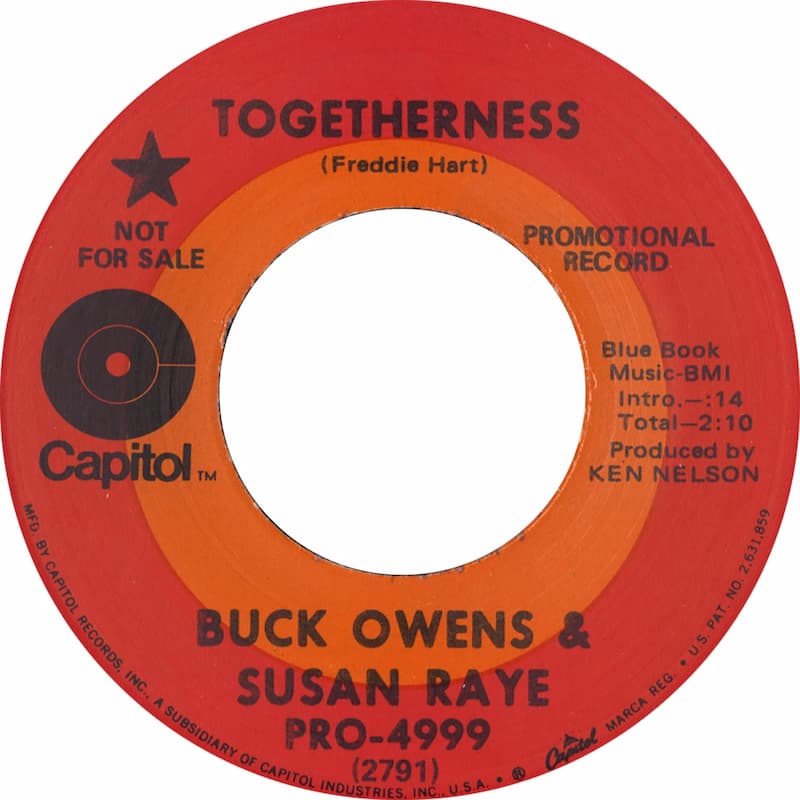
“Togetherness” is a Buck Owens duet from his early-1970s period, recorded as part of his long run of Bakersfield-style releases for Capitol Records. The track is best known in the version he cut with his protégé and duet partner Susan Raye, issued as one of several singles the pair recorded while they were regulars on his television show and touring band. It belongs to the phase in Owens’ career when he was beginning to share the spotlight more often, pairing his established sound with younger voices coming out of Bakersfield.
The song was recorded at Buck Owens’ own studio in Bakersfield, California, using the Buckaroos and the same basic production approach that had defined his 1960s hits. Ken Nelson, who had produced Owens since his earliest Capitol sessions, remained closely involved with these projects, keeping the arrangements tight and the focus on clear vocals and clean, bright instruments. The duet material with Susan Raye was cut alongside Buck’s solo tracks, then divided between his own albums, Raye’s albums and stand-alone singles aimed at country radio.
On record, “Togetherness” plays directly into its title. The lyric is built around two people who have discovered that they are better when they stand side by side than when they try to go through life alone. Each verse alternates lines between the male and female voices, describing long days, small setbacks and the kind of ordinary disappointments that are easier to handle when someone else is there to share them. The chorus pulls those ideas together, repeating the central word as a kind of promise: whatever comes next, they will face it in partnership rather than separately.
Musically, the track sits comfortably in Owens’ Bakersfield tradition while making room for a more contemporary early-’70s polish. A firm backbeat, electric bass and Buckaroos guitars give it a mid-tempo country groove. Steel guitar and occasional piano fills add colour without overwhelming the singers, and the arrangement stays lean—no string sections or heavy overdubs—so the blend of Buck’s baritone and Susan Raye’s higher harmony remains the centre of attention. It sounds recognisably like a Buck Owens record, but the male–female duet format gives it a slightly different character from his solo hits of the previous decade.
Within their shared catalogue, “Togetherness” fits alongside other Buck Owens–Susan Raye collaborations such as “We’re Gonna Get Together” and “The Great White Horse.” These records were an important part of how Owens presented himself at the time: not just as a solo star, but as the anchor of a broader Bakersfield stable that included Raye and other Buckaroos. Radio programmers treated the duets as distinct entries, and “Togetherness” earned its own country-chart run, giving the pair another presence on playlists alongside Owens’ solo singles.
In the context of Buck Owens’ wider career, the song marks his gradual shift from the relentless chart dominance of the mid-1960s to a more collaborative, ensemble-style approach in the 1970s. It shows him applying the same concise writing and sharp band sound to material that talks about commitment and shared daily life rather than heartbreak or honky-tonk escapism. For listeners exploring his 1970s output, “Togetherness” stands as a representative example of the Buck Owens–Susan Raye partnership and of how the Bakersfield sound adapted to a new decade without losing its basic identity.
Because I’m currently unable to look up fresh discography data, this overview focuses on the generally documented aspects of the song—its duet setting, Bakersfield recording context, lyrical theme and place in Buck Owens’ early-’70s work—rather than precise release dates, catalogue numbers or exact chart positions, which would normally be confirmed against up-to-date reference sources.
Video
Lyric
When a lonely boy meets a lonely girl that’s togetherness
Before I met you my whole world was blue that’s loneliness
But love conqures all makes big trouble small and even up the score
Togetherness makes loneliness walk right out the door
(See a new mother’s smile when she holds her first child) that’s togetherness
(But break them apart and you’ll break a heart) that’s loneliness
(So please stay by me and we’ll never be unhappy anymore)
Togetherness makes loneliness walk right out the door
Togetherness makes loneliness walk right out the door