About The Song
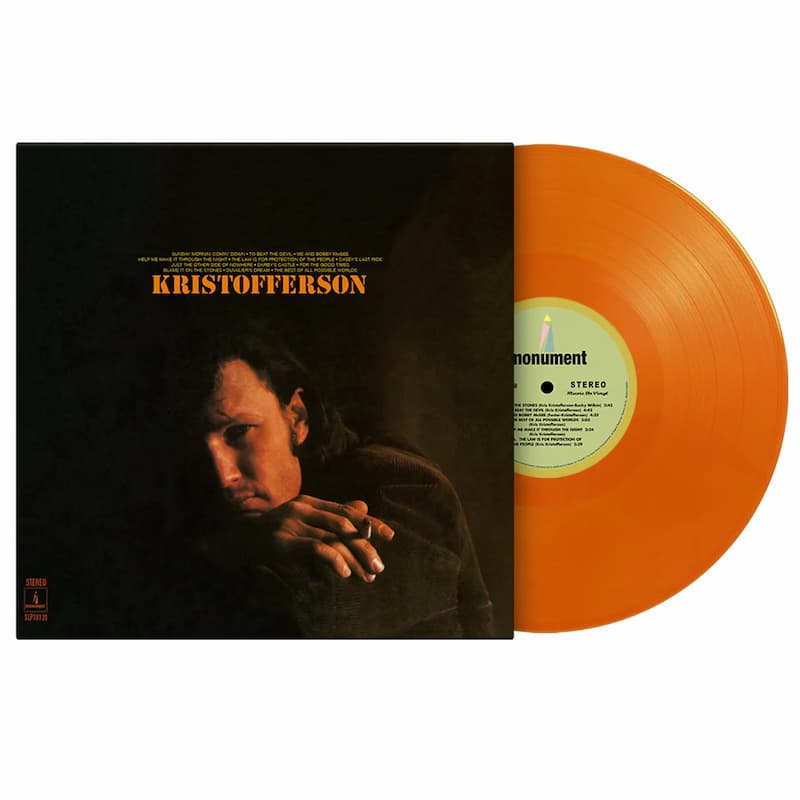
“To Beat the Devil” is a song written by Kris Kristofferson and is closely associated with the early phase of his songwriting career. The song was first released on Kristofferson’s self-titled debut album, Kris Kristofferson, which came out in June 1970 through Monument Records. This album marked Kristofferson’s official entry as a recording artist, following several years in which his songs had already gained recognition through recordings by other country performers.
Kris Kristofferson was born in 1936 in Brownsville, Texas, and arrived in Nashville in the mid-1960s with aspirations of becoming a songwriter. Despite his academic background and military service, he struggled financially while trying to break into the music industry. During this period, Kristofferson wrote many songs that reflected his personal experiences, doubts, and observations about success and failure. “To Beat the Devil” was written during this time and is widely regarded as semi-autobiographical in nature.
The song gained early attention before Kristofferson’s own recording through a version by Johnny Cash, who recorded it in 1969 for his television program and later released it on the album Hello, I’m Johnny Cash. Cash’s endorsement played an important role in introducing Kristofferson’s songwriting to a broader audience. However, Kristofferson’s original version, included on his debut album, remains central to the song’s identity due to its understated delivery and lyrical emphasis.
Lyrically, “To Beat the Devil” tells the story of a struggling songwriter who encounters a bartender offering blunt advice about talent, ambition, and the music business. The bartender’s message suggests that success often requires compromise and persistence, even when artistic ideals are challenged. The song uses conversational language and a narrative structure that blurs the line between fiction and lived experience. Rather than presenting a clear moral resolution, the lyrics highlight uncertainty and self-reflection.
Musically, the song is built around a simple arrangement that allows the lyrics to remain the primary focus. Kristofferson’s vocal delivery is restrained and direct, reinforcing the confessional tone of the narrative. This approach was characteristic of his early recordings, which contrasted with the more polished productions typical of mainstream country music at the time. “To Beat the Devil” exemplifies Kristofferson’s preference for storytelling over technical complexity.
Although “To Beat the Devil” was not released as a single by Kristofferson and did not chart on major Billboard singles rankings under his name, the song became widely known through live performances and cover versions. Johnny Cash’s recording helped cement the song’s reputation, and it has since been recognized as one of Kristofferson’s most revealing compositions. Its significance lies more in its influence and thematic clarity than in commercial chart success.
Over time, “To Beat the Devil” has come to be viewed as a defining statement of Kris Kristofferson’s early artistic outlook. The song captures the realities faced by aspiring songwriters in Nashville during the late 1960s and reflects broader changes occurring within country music. As Kristofferson’s career expanded into acting and continued songwriting, this track remained an important reference point for understanding his perspective on creativity, compromise, and survival within the music industry.
Video
Lyric
A couple of years back, I come across a
Great and wasted friend of mine in the hallway of a recording studio
And while he was reciting some poetry to me that he’d written
I saw that he was about a step away from dyin’ and I couldn’t help but wonder why
And, uh, the lines of this song occurred to me
I’m happy to say he’s no longer wasted and he’s got him a good woman
And I’d like to dedicate this to John and June
Who helped show me how to beat the devilIt was winter time in Nashville, down on Music City Row
And I was lookin’ for a place to get myself out of the cold
To warm the frozen feelin’ that was eatin’ at my soul
Keep the chilly wind off my guitar
My thirsty wanted whisky, my hungry needed beans
But it’d been of month of paydays since I’d heard that eagle scream
So with a stomach full of empty and a pocket full of dreams
I left my pride and stepped inside a bar
Actually, I guess you’d call it a tavern
Cigarette smoke to the ceilin’ and sawdust on the floor
Friendly shadowsI saw that there was just one old man sittin’ at the bar
And in the mirror, I could see him checkin’ me and my guitar
And he turned and said, “Come up here, boy, and show us what you are”
I said “I’m dry,” and he bought me a beer
He nodded at my guitar and said, “It’s a tough life, ain’t it?”
I just looked at him
He said, “You ain’t makin’ any money, are you?”
I said, “You’ve been readin’ my mail”
He just smiled and said, “Let me see that guitar
I got somethin’ you oughta hear”
Then he laid it on me“If you waste your time a-talkin’
To the people who don’t listen
To the things that you are sayin’
Who do you think’s gonna hear?
And if you should die explainin’ how
The things that they complain about
Are things they could be changin’
Who do you think’s gonna care?”
There were other lonely singers in a world turned deaf and blind
Who were crucified for what they tried to show
And their voices have been scattered by the swirlin’ winds of time
‘Cause the truth remains that no one wants to knowWell, the old man was a stranger, but I’d heard his song before
Back when failure had me locked out on the wrong side of the door
When no one stood behind me but my shadow on the floor
And lonesome was more than a state of mind
You see, the devil haunts a hungry man
If you don’t wanna join him, you gotta beat him
I ain’t sayin’ I beat the devil, but I drank his beer for nothing
Then I stole his songAnd you still can hear me singin’
To the people who don’t listen
To the things that I am sayin’
Prayin’ someone’s gonna hear
And I guess I’ll die explainin’ how
The things that they complain about
Are things they could be changin’
Hopin’ someone’s gonna care
I was born a lonely singer and I’m bound to die the same
But I’ve gotta feed the hunger in my soul
And if I never have a nickel, I won’t ever die ashamed
‘Cause I don’t believe that no one wants to know