About The Song
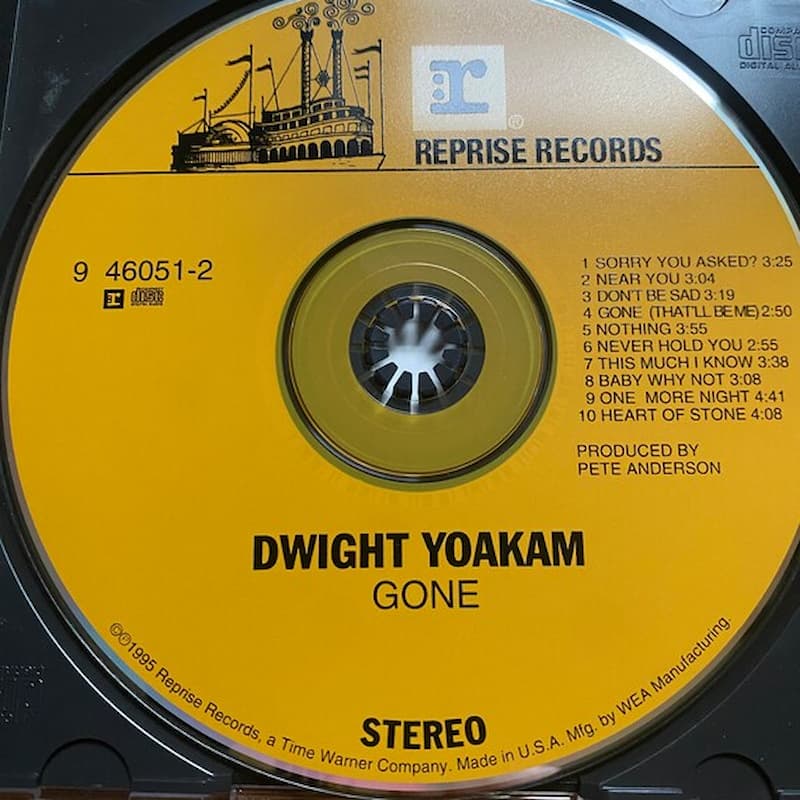
“Gone (That’ll Be Me)” is a country song written and recorded by American singer-songwriter Dwight Yoakam. It serves as the title track of his studio album Gone, released by Reprise Records on October 31, 1995. Produced by longtime collaborator Pete Anderson and recorded at Capitol Studios in Hollywood, the song was issued as the album’s second U.S. country single in 1996. On the charts, “Gone (That’ll Be Me)” reached No. 51 on the Billboard Hot Country Singles & Tracks chart in the United States and No. 43 on the RPM Country Tracks chart in Canada, making it a modest hit compared with Yoakam’s earlier Top 10 singles.
The album Gone occupies a transitional place in Yoakam’s career. It followed the live set Dwight Live and the triple-platinum success of This Time (1993), an album that produced several Top 5 country hits. In contrast, Gone peaked at No. 5 on the Billboard Country Albums chart and became his first studio album not to generate a Top 10 country single, even though it produced four charting titles: “Nothing”, “Gone (That’ll Be Me)”, “Sorry You Asked?” and “Heart of Stone.” Critical discussion of the record often emphasizes that Yoakam and Anderson were more interested in stretching their sound than in repeating a proven commercial formula.
Within the track list of Gone, “Gone (That’ll Be Me)” appears as the fourth track and is one of several songs written solely by Yoakam. The album’s credits note that all material was composed by him, with “Nothing” and “Heart of Stone” co-written with Kostas, underlining how closely the title song reflects Yoakam’s own writing voice. Executive producer Dusty Wakeman later described the sessions as deliberately experimental, with Yoakam composing on electric guitar and the team exploring different textures across the record. Against this backdrop, the title track functions as a relatively concise and focused statement inside a more sonically adventurous album.
Lyrically, “Gone (That’ll Be Me)” is built around a simple but emphatic chorus in which the narrator tells a partner that the person walking away “for the last time today” will be him. The verses refer back to earlier threats of leaving and to “leavin’ plans” the other person had made, reversing the usual perspective of the one who is abandoned. Instead, the singer calmly announces his own departure and suggests that, although it may seem sudden, the listener should be able to “figure it all out.” The language is direct and repetitive, in keeping with honky-tonk and classic country writing, but the twist in viewpoint gives the song a sense of quiet resolve rather than open confrontation.
Musically, the track is a mid-tempo country piece with a strong rhythmic pulse and a streamlined arrangement. Electric guitars, bass and drums provide the core backing, with additional color from steel guitar and keyboards typical of Yoakam’s mid-1990s work. Anderson’s production favors clarity and space, allowing Yoakam’s vocal phrasing and the repeated hook to stand out. Compared with some of the more overtly experimental tracks on Gone that incorporate horns, mariachi elements or rock textures, “Gone (That’ll Be Me)” leans closer to the Bakersfield-influenced sound that had defined Yoakam’s earlier albums, making it a logical choice for single release.
As a single, “Gone (That’ll Be Me)” did not match the commercial impact of Yoakam’s early-1990s hits but still secured chart positions in both the U.S. and Canada. Its performance at country radio reflected broader shifts in the format during the mid-1990s, when Yoakam’s more roots-oriented style had to compete with increasingly pop-leaning acts. A music video directed by Yoakam himself accompanied the single, giving visual emphasis to the song during its promotion and appearing on country music television outlets.
In the years since its release, “Gone (That’ll Be Me)” has continued to appear in catalog projects that revisit Yoakam’s Warner/Reprise period. A remastered version is included in the anthology Please Baby: The Warner Bros. Years, and Yoakam later re-cut the song in a bluegrass-oriented arrangement for his 2016 album Swimmin’ Pools, Movie Stars…, alongside re-imagined versions of several earlier titles. These later appearances underline the song’s durability in his repertoire and its role as a title piece for an album that marked a shift from straightforward neo-traditional country toward a more experimental, wide-ranging sound.
Video
Lyric
That’ll be me you’ll see walking away
That’ll be me you’ll see for the last time today
Oh, that’ll be me you’ll see for not very long
‘Cause that’ll be me you’ll see that’ll be gone
Remember how you warned me
‘Bout all your leavin’ plans
Well, I know this might seem unexpected
So prepare yourself the best you can
‘Cause that’ll be me you’ll see walking away
That’ll be me you’ll see for the last time today
Oh, that’ll be me you’ll see for not very long
‘Cause that’ll be me you’ll see that’ll be gone
Think back on when you threatened
Oh, and never left no doubt
Although this could be kinda sudden
I’m sure you can figure it all out
Oh, that’ll be me you’ll see walking away
That’ll be me you’ll see for the last time today
That’ll be me you’ll see for not very long
‘Cause that’ll be me you’ll see that’ll be gone
Yeah, that’ll be me you’ll see that’ll be gone